The events we experience in our formative years greatly impact our life perspectives and approaches to work. People who have experienced similar events at the same time in their life will share core values, preferences, attitudes and behaviors that follow them into middle age and later years.
These values and attitudes follow people into the workplace and they will hold very different views about career paths and interaction with co-workers. People from different generational cohorts are motivated differently, learn differently and communicate differently. By learning about these differences, new strategies can be developed to strengthen workplace relationships and productivity.

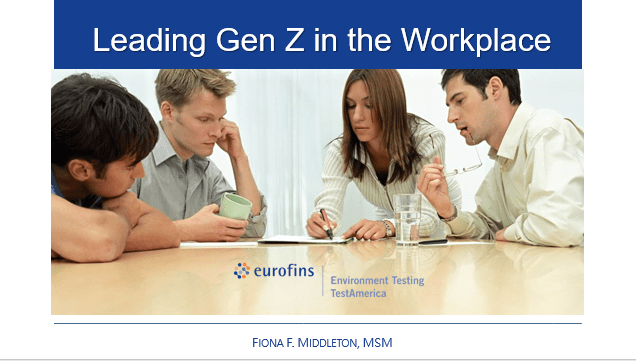
Leading Gen Z Deck
Click for a copy of the slide deck.

Meet Gen Z Handout
Click for a copy of the handout.
Recommended Reading:
iGen: Why Today’s Super-Connected Kids Are Growing Up Less Rebellious, More Tolerant, Less Happy – and Completely Unprepared for Adulthood | Jean M. Twenge, PHD
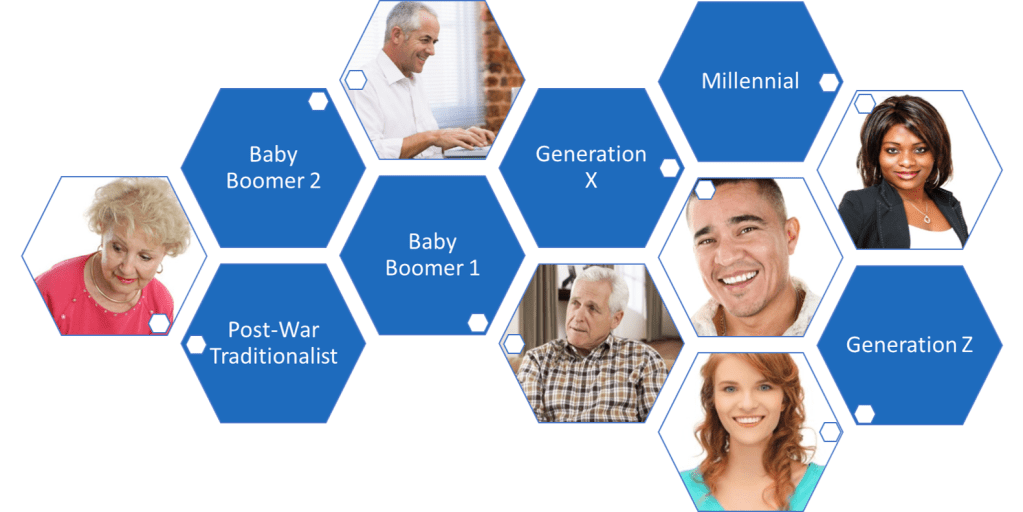
One Workplace – Five Generations
There are five generations in today’s workplace. Some of the larger cohorts can be further divided to more accurately reflect their beliefs and values.
Traditionalists: born 1945 and earlier
-Depression – born 1912 – 1921
-World War II – born 1922 – 1927
-Post War – born 1928 – 1945
Boomers: born 1946-1965
-Leading Edge – born 1946 – 1954
-Trailing Edge – born 1955 – 1964
Generation X: born 1965-1980
Millennials: born 1981-1995
Generation Z: born 1996-2010
ff
 Fiona F. Middleton, MSM